Rhode Island Revolutionary War Soldiers Honored in Wilmington, Delaware
Share this Page
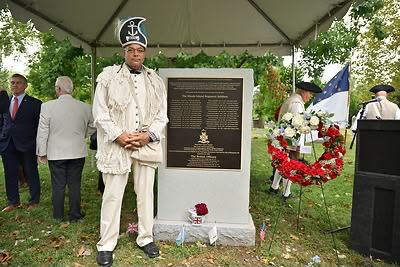
On September 23, 2026, a permanent memorial was dedicated at the Wilmington-Brandywine Cemetery, Wilmington, Delaware, for at least 66 Revolutionary War soldiers buried for nearly 250 years in a largely forgotten mass grave. The ceremony brought together representatives from Delaware and Rhode Island, the U.S. and British militaries, historical organizations, descendants, and reenactors as part of the nation’s 250th-anniversary observances.
What the Memorial Marks
The grave contains the remains of 28 soldiers of the Rhode Island Regiment and at least 38 British soldiers. Historical research has identified 33 of the men by name – all 28 Rhode Islanders and five British officers – an unusually high degree of identification for a Revolutionary War mass burial.
The Rhode Island contingent is particularly significant. Fourteen of the 28 Rhode Island soldiers were African American, and four had enlisted while enslaved. Their service reflects the extraordinary racial composition of Rhode Island’s Continental forces and provides another connection to the Black soldiers who served in the First Rhode Island Regiment and fought at the Battle of Rhode Island in 1778.
By the Yorktown campaign, Rhode Island’s Continental regiments had been consolidated into the Rhode Island Regiment. These soldiers participated in the campaign that culminated in the British surrender at Yorktown in October 1781. On their journey north afterward, disease – particularly smallpox – struck the regiment severely. The sick were treated in a military hospital established in Wilmington’s Academy building, on the present-day site of the Grand Opera House. Rhode Island soldiers who died there were buried in the city’s Poor and Strangers Burial Ground, an 18th-century potter’s field at 10th and King Streets.
The British soldiers buried with them came from an earlier chapter of the war. They had been wounded at the Battle of Brandywine in September 1777, brought to Wilmington for treatment, and died of their wounds.
From Rhode Island to Yorktown – and Wilmington
The story provides a remarkable connection between Rhode Island’s Revolutionary War history and the war’s conclusion. In 1778, the First Rhode Island Regiment, which included Black, Indigenous, and white soldiers, distinguished itself during the Battle of Rhode Island in Portsmouth. Rhode Island.
Continental soldiers continued serving long after the British evacuated Aquidneck Island. After consolidation of the state’s Continental regiments, the Rhode Island Regiment ultimately participated in the decisive Yorktown campaign of 1781. Victory did not mean that the danger was over. Disease remained one of the greatest killers of Revolutionary War soldiers. While returning north after Yorktown, smallpox and other illnesses swept through the Rhode Island troops. Twenty-eight of the men who died in Wilmington would eventually come to rest together in the grave now marked by the new memorial.
Private Caesar Rose
One of those soldiers was Private Caesar Rose, an African American Rhode Island soldier who served at Yorktown and died of smallpox in Wilmington on December 9, 1781. Nearly 245 years later, his descendant Jason Roomes participated in the September 23rd memorial ceremony. His presence provided an extraordinary personal connection between the Rhode Island soldiers of the Revolution and their descendants today.
A Grave Nearly Lost to History
The Rhode Islanders and British soldiers were not originally buried at Wilmington- Brandywine Cemetery. Historical research indicates that they were first interred in the Poor and Strangers Burial Ground. As Wilmington expanded during the nineteenth century, remains from that burial ground were disinterred and transferred to Wilmington-Brandywine Cemetery between 1850 and 1853. The soldiers were reburied collectively, and over time knowledge of exactly who rested there largely disappeared. Historian Bill Knightly and other researchers reconstructed the story through regimental records, hospital and death records, cemetery histories, and other archival sources. Their work connected the soldiers who died in Wilmington with the original burial ground and, ultimately, the later mass grave. Importantly, the men have been identified through historical records, not through DNA or forensic identification of individual remains. The evidence establishes that these men were buried in the original Wilmington burial ground and subsequently transferred together, but it does not associate particular skeletal remains with individual soldiers.
The September 23 Ceremony
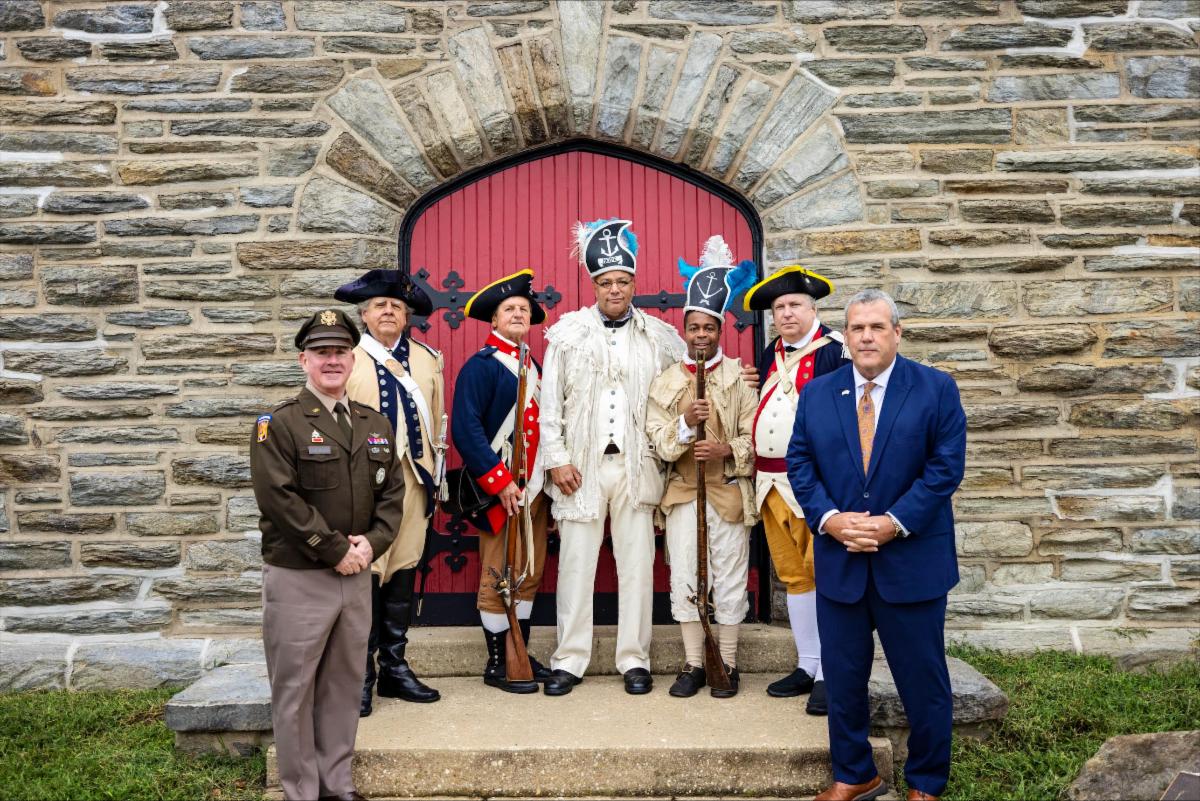
The dedication ceremony was held at Wilmington-Brandywine Cemetery at 701 Delaware Avenue. The program included the Wilmington Police Department Color Guard, the U.S. and U.K. national anthems, remarks by Wilmington Mayor John Carney and other officials, reenactors, military honors, and the formal unveiling of the memorial. Rhode Island was represented by Secretary of State Gregg Amore and Rhode Island National Guard Adjutant General Andrew Chevalier. Jason Roomes participated as a descendant of Private Caesar Rose. Perhaps most importantly, the names of all 33 soldiers who have been identified were read aloud, restoring individual identities to men who had rested anonymously for generations. The closing commemorations included “Amazing Grace” on bagpipes, “Taps” and the British “Last Post” on trumpet, and a musket salute by Rhode Island Regiment reenactors.
Why It Matters
The Wilmington site is described as one of the largest known Revolutionary War mass graves in the United States. The new memorial does more than mark a burial place: it restores names and individual stories to men who had been largely forgotten for almost two and a half centuries. For Rhode Island, the memorial has particular significance. The story connects the soldiers who fought during the Rhode Island Campaign and Battle of Rhode Island in 1778 with the Continental Army’s ultimate victory at Yorktown in 1781 – and reminds us that for some soldiers, the final price of that victory was paid not on the battlefield, but from disease on the long journey home. Twenty-eight Rhode Island soldiers who never made it home now have their names remembered.
Click here for AP News clip on the event.
Joe Studlick and Jason Roomes