
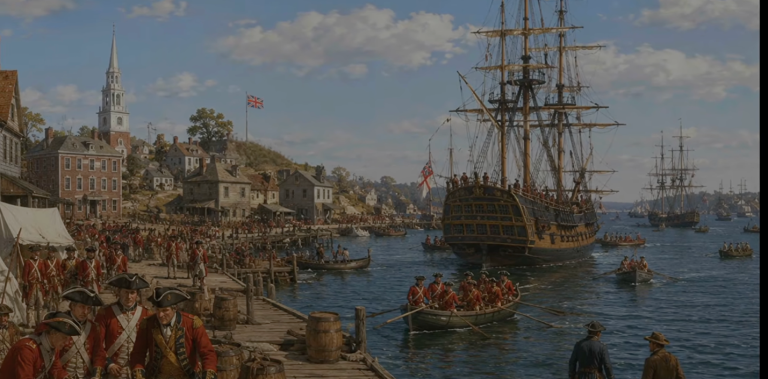
More Than 32,000 Views: Battle of Rhode Island Film Breaks Out on YouTube
BoRIA’s Battle of Rhode Island film has turned out to be a genuine breakout on YouTube.
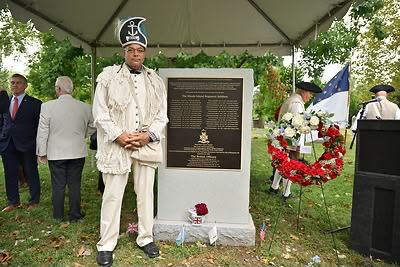
Rhode Island Revolutionary War Soldiers Honored in Wilmington, Delaware
A permanent memorial was dedicated at the Wilmington-Brandywine Cemetery, Wilmington, Delaware, for at least 66 Revolutionary War soldiers.

September 2026 Newsletter
The September 2026 edition of “The BoRIA Post” featuring our latest articles, cleanup recap, news and upcoming events.
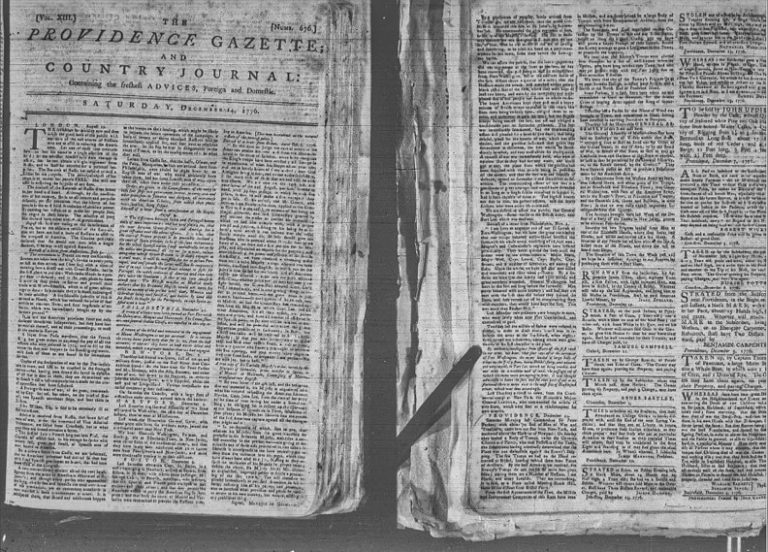
1776: Gleanings From the Year as Reported in the Pages of the Providence Gazette
A year of Revolutionary War history as it was actually read by Rhode Islanders at the time — week by week.
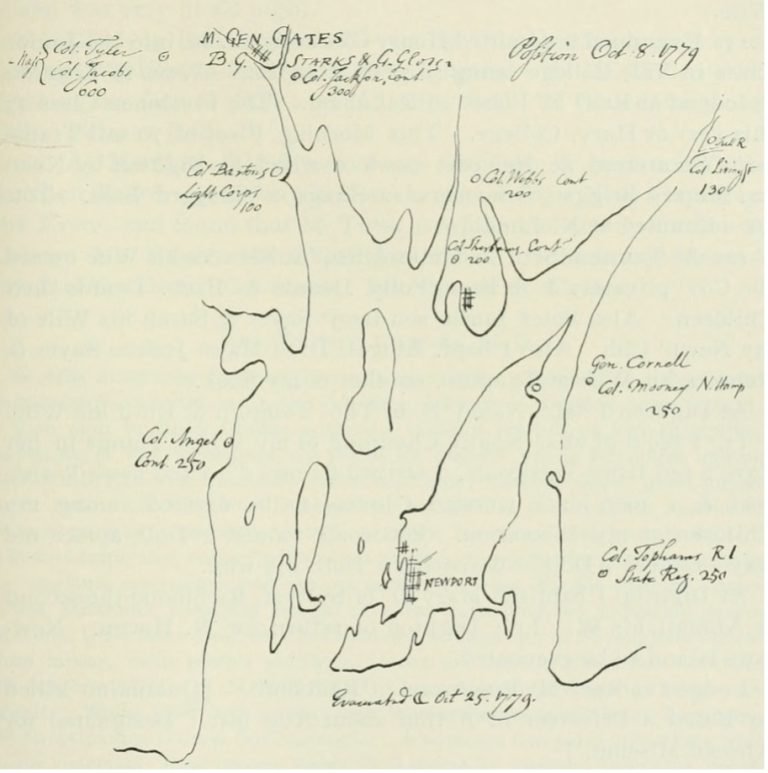
Little Compton and the Battle of Rhode Island
Steven Lubar explores how the town’s residents endured raids, scarcity, military service, and constant uncertainty during the British occupation of nearby Aquidneck Island.
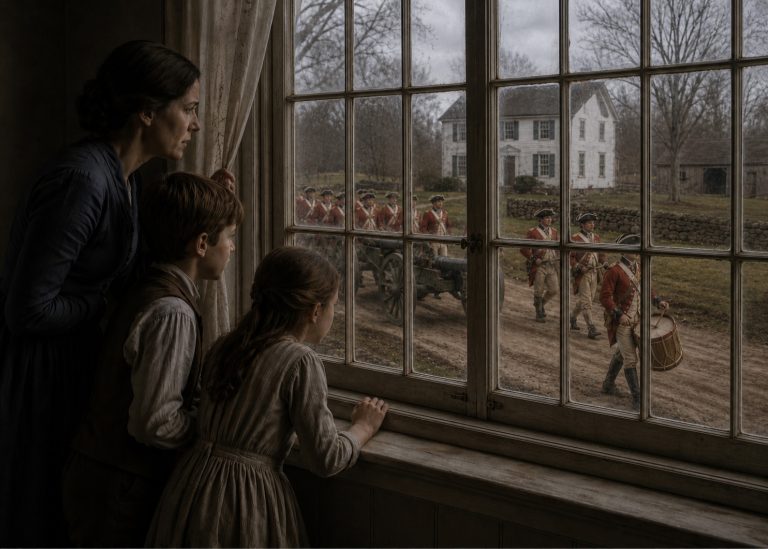
“Battle of Rhode Island” Film Images: Historical Corrections
Viewers who watched the film closely identified some historical inaccuracies in our AI-generated illustrations.
Remembering the Revolution: Little Compton, Rhode Island
Steven Lubar’s new book, Remembering the Revolution: Little Compton, Rhode Island, brings their experiences to life.

Summer Reflections: Revolutionary History Comes To Our Community
As summer draws to a close and the first hints of autumn arrive, we look back with gratitude on a memorable final two weeks of August.

BoRIA’s Educational Outreach and Resources
The Battle of Rhode Island Association received funding through the Rhode Island 250 Commission to provide those resources

Sunset Salute Commemorates 248th Anniversary of the Battle of Rhode Island
The BHFRC hosted their third annual Sunset Salute to commemorate the 248th anniversary of the Battle of Rhode Island.
August 2026 Newsletter
The August 2026 edition of “The BoRIA Post” featuring our new documentary, brochure, news and upcoming events.

New BoRIA Brochure Highlights Rhode Islanders Who Helped Shape the Revolution
The BoRIA’s newest publication, Key Rhode Islanders in the American Revolution: The Leaders, Soldiers & Patriots Who Shaped America, is now available.

Now Available: 1778: Battle of Rhode Island — Rhode Island’s Revolutionary Story Comes to Life
1778: Battle of Rhode Island is an 18-minute documentary that brings Rhode Island’s Revolutionary War story to life.

BoRIA Receives RI Legislative Grant & Civic Engagement Grant
BoRIA plans to use these funds to expand community programs, develop new educational materials, and engage more Rhode Islanders in learning about the state’s role in the Revolutionary War.

Rhode Island Heritage Hall of Fame Induction held at Butts Hill Fort
On Sunday, July 19th, the Rhode Island Heritage Hall of Fame inducted four people associated with Rhode Island’s Revolutionary War history.

BoRIA Education Outreach
BoRIA’s education outreach team has been busy this year creating new ways to support teachers as they bring Rhode Island’s Revolutionary War story into their classrooms.

July 2026 Newsletter
The July 2026 edition of “The BoRIA Post” featuring our new Butts Hill Fort digital collection, grant updates, news and upcoming events.

Unlocking the Hidden History of Butts Hill Fort
BoRIA is pleased to report that two consecutive summer field seasons (2024/2025) at Butts Hill Fort are revealing remarkable new insights into one of Rhode Island’s most significant Revolutionary War sites.

The RI250 Quest Celebrates Our 250th Around the State
Through a variety of historian-written and recorded videos, these self-guided walking and driving tours have enlivened the exploration from town to town, with teams competing for points and prizes along the way.

The Hill’s Story
“The Hill’s Story” was written especially for fourth grade students by Gloria Schmidt, Battle of Rhode Island Association historian and outreach coordinator.

Bristol’s Fourth of July Celebration: A Tradition Since 1785
The Bristol Fourth of July Celebration traces its roots to 1785, just two years after the end of the Revolutionary War.

June 2026 Newsletter
The June 2026 edition of “The BoRIA Post” featuring our new Butts Hill Fort research, the latest in our lecture series, news and upcoming events.

French Archives Shed New Light on Butts Hill Fort
BoRIA has completed an important new research project that has uncovered some of the most significant primary-source evidence yet identified concerning Butts Hill Fort.

French Engineers at Butts Hill Fort
Dr. Robert A. Selig’s new report highlights French archival sources that deepen our understanding of Butts Hill Fort.

May 2026 Newsletter
The May 2026 edition of “The BoRIA Post” featuring the latest on our Re-Take the Hill Campaign, outreach efforts, news and upcoming events.

April 2026 Newsletter
The April 2026 edition of “The BoRIA Post” featuring the latest on Butts Hill Fort, our new lecture video, news and upcoming events.

John Trumbull Under Fire at the Battle of Rhode Island
John Trumbull of Connecticut today is rightfully famous as a painter of Revolutionary War scenes.

Why Captain Wallace Failed to Prevent the Revolutionary War
From December 1774 to March 1776, Captain James Wallace of the British Navy patrolled Narragansett Bay.

March 2026 Newsletter
The March 2026 edition of “The BoRIA Post” featuring our new board game, latest shared article, news and upcoming events.

February 2026 Newsletter
The January 2026 edition of “The BoRIA Post” featuring our annual review, grant updates, news and upcoming events.

BHFRC Receives 2026 Preserving America Grant from Americana Corner
We’re proud to announce that we’ve been selected as a 2026 @AmericanaCorner Preserving America Grant recipient!

January 2026 Newsletter
The January 2026 edition of “The BoRIA Post” featuring our annual review, grant updates, news and upcoming events.

December 2025 Newsletter
The December 2025 edition of “The BoRIA Post” featuring our latest articles, grant updates, news and upcoming events.

Portsmouth sewing shop owner teaching RI history one stitch at a time
Conceived by artist Stefan Romero, the tapestry’s panels are each hand-embroidered by volunteers and artisans alike, with an emphasis on lesser-known events of the American Revolution, highlighting women and minority involvement.

‘Small State, Big History’ Tells Intriguing Stories
McBurney and an assortment of writers and historians are adding important details to our knowledge of Rhode Island history while telling charming stories about little known people and resurrecting interest in significant historical footnotes.
November 2025 Newsletter
The November 2025 edition of “The BoRIA Post” featuring our lecture series videos, grant updates, news and upcoming events.
October 2025 Newsletter
The October 2025 edition of “The BoRIA Post” featuring our latest shared article, grant updates, news and upcoming events.
September 2025 Newsletter
The September 2025 edition of “The BoRIA Post” featuring our latest original article, grant updates, news and upcoming events.

Rhode Island State Government’s Historical Lethargy
Historian Laureate Emeritus Patrick T. Conley urges state leaders to champion Butts Hill Fort and the Battle of Rhode Island as we approach America’s 250th
August 2025 Newsletter
The August 2025 edition of “The BoRIA Post” featuring our latest original article, grant updates, news and upcoming events.

Longtime Friends
Marking 325 years, Quaker meeting house in Portsmouth is RI’s oldest active church
July 2025 Newsletter
The July 2025 edition of “The BoRIA Post” featuring our latest original article, grant updates, news and upcoming events.

Bristol in the American Revolutionary War
Discover Bristol, Rhode Island’s vital role in the American Revolution, including the 1778 British raid and the roots of the nation’s oldest Fourth of July celebration.
June 2025 Newsletter
The June 2025 edition of “The BoRIA Post” featuring our latest original article, staff updates, news and upcoming events.
May 2025 Newsletter
The May 2025 edition of “The BoRIA Post” featuring our latest original article, news and upcoming events.

Butts Hill Fort Leads Off Portsmouth 250th Celebrations
Butts Hill Fort came to life on the first weekend in May 2025 as we collaborated with the Brigade of the American Revolution (BAR) to bring together reenactment regiments from six states to form an authentic living history encampment.
April 2025 Newsletter
The April 2025 edition of “The BoRIA Post” featuring our latest original article, news and upcoming events.

Agrippa Hull: A Revolutionary Story
Agrippa Hull was a free black man who enlisted in the Continental Army from Stockbridge, Massachusetts, and served until the end of hostilities.
March 2025 Newsletter
The March 2025 edition of “The BoRIA Post” featuring our 401Gives campaign, news and upcoming events.

Historic Lafayette House in Tiverton Demolished
In a shocking turn of events, the historic Abraham Brown House, also known as the Lafayette House, was demolished on December 18, 2024, in Tiverton, RI.

British Casualties in the Battle of Rhode Island
Amid the chaos of battle, soldiers faced wounds, loss, and survival, shaping their fates for years to come.
February 2025 Newsletter
The February 2025 edition of “The BoRIA Post” featuring grant updates, news and upcoming events.

The Final Mission of Butts Hill Fort 1782
In June 1781, French forces left Butts Hill and the rest of Rhode Island (Aquidneck Island) to join Washington as they marched toward Yorktown. This departure came after nearly a year of preparation, including a mock battle on Rhode Island in 1780.
January 2025 Newsletter
The January 2025 edition of “The BoRIA Post” featuring the 2024 annual report, news and upcoming events.

Bob Cembrola: Discovery of British frigates and the University of Rhode Island
This occupation put a choke hold on commerce and caused great damage to many buildings on Aquidneck Island and communities surrounding the bay.
December 2024 Newsletter
The December 2025 edition of “The BoRIA Post” featuring a review of 2024’s efforts at Butts Hill Fort, WARO trail signs in RI and new articles.

Butts Hill Fort Awarded $500 from Student at Hathaway Elementary School in Portsmouth, RI.
On Monday, December 16th, members of the Butts Hill Fort Restoration Committee (BHFRC) and the Battle of Rhode Island Association (BoRIA) were on hand at Hathaway Elementary school in Portsmouth for a special check presentation.

Washington-Rochambeau Revolutionary Route National Historic Trail Signs Installed throughout Rhode Island
A request from the Battle of Rhode Island Association in the fall of 2022 to replace 5 old W3R-US (W3R) signs in Portsmouth became a 2-year effort by the RI Department of Transportation (RIDOT) to replace all these signs in RI.

Historic Tiverton farmhouse falls to the wrecking ball
Historic Lafayette House, which housed French general during American Revolution, demolished without warning, preservationists say

2024 in Review: Butts Hill Fort Restoration Committee Completes “Extreme Makeover”
For 2024, The BHFRC set the goal of clearing, improving and stabilizing the entire multi-acre southern hemisphere of Butts Hill Fort.

French Officers at the Battle of Rhode Island
Dozens of French Army officers departed France for America to serve as officers in the Continental Army. Several fought during the Rhode Island Campaign of July-August 1778 and at the Battle of Rhode Island.

A Rhode Island Officer’s Recollections Lead to New Information on Battle of Red Bank
The author recently came across the recollections of Simeon Thayer, who served from 1777 to 1781 as a major in Rhode Island Continental Army regiments. He was one of the outstanding military figures from Rhode Island during the war.

Digging in: Information from Robert Selig’s work on the French at Butts Hill
BoRIA sponsored valuable research on the construction of Butts Hill Fort by Robert Selig and John K. Robertson.
November 2024 Newsletter
The November 2024 edition of “The BoRIA Post.”

BoRIA Secures $71,749 Grant from van Beuren Charitable Foundation for Continued Archaeology at Butts Hill Fort
The Battle of Rhode Island Association (BoRIA) has been awarded a $71,749 grant from the van Beuren Charitable Foundation (vBCF) to support Phase 2 of archaeological work at Butts Hill Fort. This project, scheduled for 2025, will be led by Dr. Alexandra Uhl of Stonehill College along with her students.

“I Had Like to Have Forgot to Mention a Famous Sham Battle”
With the Naval War College on Aquidneck Island, we island residents have a familiarity with the idea of “wargaming” or rehearsing the decisions leaders would make during warfare involving joint military operations. Wargaming did not begin with the War College in the 1870s. While the French were on the island during the American Revolutionary War from 1780 to 1782, they held “mock battles” by Woods Castle in the Third Beach area of Middletown.
Preparing for a Visit of Rochambeau to Butt’s Hill
In a letter dated August 2, 1780, from Newport, Lafayette wrote to American General William Heath about how to prepare for Rochambeau’s visit.
October 2024 Newsletter
The October 2024 edition of “The BoRIA Post.”

The Settlement of Prudence Island And its Abandonment During the Revolutionary War
This paper is an account of the settlement of Prudence Island in Narragansett Bay, RI, prior to, and including its abandonment during the War for Independence.

Victims of Newport’s Stamp Act Riots Reimbursed (Not)
Bostonian merchants, sailors and dockworkers hated the Stamp Act enacted by Parliament in early 1765. What right did Parliament have to tax Americans when they were not represented in Parliament?

Volunteers Needed For Butts Hill Fort Cleanup on October 27th!
Portsmouth, RI. The Butts Hill Fort Restoration Committee (BHFRC) is inviting volunteers to our Fall cleanup on Sunday, Oct 27th.
September 2024 Newsletter
The September 2024 edition of “The BoRIA Post.”

Take the Newport Black History Walking Tour from our partner RISHM!
Newport Black History Walking Tours is a unique walk-through-history experience that has been made possible by RI Slave History Medallions.

Lafayette in Rhode Island
“The moment I heard of America, I lov’d her.” The Marquis de Lafayette wrote this in a letter from his camp near Warren, Rhode Island, on September 23, 1778.
August 2024 Newsletter
The August 2024 edition of “The BoRIA Post.”

Another “Black Regiment” in the Revolutionary War
The Act of the General Assembly in February 1778 was historic because it was the first attempt to raise such a force of enslaved men in America.
July 2024 Newsletter
The July 2024 edition of “The BoRIA Post.”

Rochambeau Comes to Help the Revolution, Gets a Cold Shoulder
When le Comte Rochambeau and his 6,000 men sailed into Newport Harbor on the afternoon of July 11, 1780, they expected to be met by a welcoming committee of dignitaries, cheering crowds perhaps, or cannon salutes, speeches, a parade.

Newport’s Last Slave Auction: Rochambeau’s Prizes
In this article, historian Robert Selig writes about what may be the last slave auction in Newport, which was held by the French forces occupying Newport in 1781.

Archaeological Field School at Butts Hill Fort
Students from Salve Regina University, Stonehill College, and the University of Kentucky will be heading to Butts Hill Fort for a five-week Archaeological Field School beginning on May 28th.
June 2024 Newsletter
The June 2024 edition of “The BoRIA Post.”

Butts Hill Fort Receives RI Legislative Grant and Civic Engagement Grant from Town of Portsmouth
Representatives Teri Cortvriend and Michelle McGaw stopped by Butts Hill Fort in Portsmouth and presented a check for $2000.

Rochambeau’s Engineers at Butts Hill Fort July 1780 – June 1781
Butts Hill Fort was built early in the American War of Independence to protect the northern approaches to Newport, Rhode Island. Within days of his arrival in July 1780, the comte de Rochambeau sent his engineers to supervise and assist American forces in rebuilding and strengthening the fort.

Eight Clues: Recovering a Life in Fragments, Arthur Bowler in Slavery and Freedom
In January 1792 forty-three-year-old Arthur Bowler left Halifax, Nova Scotia, on his second Transatlantic journey. Captured in Africa almost thirty years earlier, enslaved in Newport, Rhode Island, for nearly twenty years, a free man for ten, he was returning to Africa.
Battle of Rhode Island Association and Van Beuren Foundation Sponsors Archaeology Field School
Students from Salve Regina University, Stonehill College, and the University of Kentucky will be heading to Butts Hill Fort for a five-week Archaeological Field School.
May 2024 Newsletter
The May 2024 edition of “The BoRIA Post.”

Battle of Rhode Island Association Sponsors Portsmouth High School’s AP History Class Tour of Battle of Rhode Island Sites
On May 21st, BoRIA and the Massachusetts Society of the Cincinnati sponsored a field trip for 40 students from Portsmouth High School’s Advanced Placement American history classes.

Historic Rhode Island Battle Flag Legislation Signed into Law
The Varnum Armory Museum and National Museum of the US Army join forces to conserve and display Rhode Island’s historic Revolutionary War battle flags.

Battle of Rhode Island Association Awarded $150,000 Grant from RI Commerce
RI Commerce recently announced their grant recipients of federal funding from the U.S. Economic Development Administration.
April 2024 Newsletter
The April 2024 edition of “The BoRIA Post.”

George Washington’s Thoughts on the Battle of Rhode Island
Washington wrote many letters in the days after the Battle. Letters he wrote to Lafayette and French commander D’Estaing were to smooth over hard feelings about the French withdrawal from Newport.

Congress and the Commodore: Esek Hopkins and the Raid on Nassau
On April 7, 1776 American ships began dropping anchors off New London, Connecticut. Esek Hopkins, commander in chief of the new Continental navy, was returning from a successful raid on the town of New Providence on Nassau island in the Bahamas.
March 2024 Newsletter
The March 2024 edition of “The BoRIA Post.”

Tour of Battle of Rhode Island Sites in Portsmouth, RI
Guides to Battle of Rhode Island Sites in Portsmouth, RI.

The Physical Challenges of Major General Nathanael Greene
The American Revolution provides heroes like almost no other event in American history. In a society where most of us live in comfort, with good medical care and remedies for what ails us, we recognize the sacrifices the people of the eighteenth century made for the cause of American liberty and, eventually, to build a new nation.

The Black Majority Regiment of the American Revolution Needs You Now!
Algernon Ward points to the image of himself in Don Troiani’s “Brave Men as Ever Fought.”
February 2024 Newsletter
The February 2024 edition of “The BoRIA Post.”

Battle of Rhode Island Association Announces Release of 5th Commemorative Coin
Battle of Rhode Island Association Announces Release of 5th Commemorative Coin

Battle of Rhode Island Association Receives Grants from the RI Sons of the Revolution & RI State Legislature
Battle of Rhode Island Association Receives Grants from the RI Sons of the Revolution & RI State Legislature

Highlights of the Timeline of the 1st Rhode Island Regiment
Highlights from a timeline covering the formation and service of the racially diverse 1st Rhode Island Regiment during the American Revolution by historian Robert Geake.
January 2024 Newsletter
The January 2024 edition of “The BoRIA Post.”

Battle of Rhode Island Association Announce Web Partnership with Rhode Island Slave History Medallions
Recently the Battle of Rhode Island Association finalized a web partnership with the Rhode Island Slave History Medallions.
December 2023 Newsletter
The December 2023 edition of “The BoRIA Post.”

Battle of Rhode Island Association Receives Grants and Donations
The Battle of Rhode Island Association recently received notice that we were awarded two grants from the Society of Cincinnati.

Hopes and Disappointments Lafayette Recalls the Rhode Island Campaign
“Lafayette, on his visit to Rhode Island in 1824 told the late Mr. Zachariah Allen as he
rode with him in a carriage across the border from Connecticut – ‘In this state I have experienced
more sudden and extreme alternations of hopes and disappointments than during all the
vicissitudes of the American war.’”

Lafayette’s Mapmaker: Michel Capitaine Du Chesnoy
Illustrating the Marquis de Lafayette’s movements in Rhode Island. It is a map of the positions of American troops in August of 1778

Battle of Rhode Island Association Announces Release of 4th Commemorative Coin
Battle of Rhode Island Association Announces Release of 4th Commemorative Coin
November 2023 Newsletter
The November 2023 edition of “The BoRIA Post.”

Ships of Rhode Island in the American Revolution by Dr. Kathy Abbass
The Rhode Island Marine Archaeology Project (RIMAP) has published many histories of the vessels in Rhode Island during the American Revolution and has done many archaeological studies to find and document what remains of those that were lost. Vessels of various types and sizes were lost due to marine peril, human error, or in engagements between enemy combatants.
Butts Hill Fort Restoration Committee and the Bristol Chapter Daughters of the American Revolution
BHFRC Chair Col. Paul Murphy (USAF Ret,) spoke to the Bristol Chapter of the Daughters of the American Revolution (DAR).

Battle of Rhode Island Association’s Editorial Board Member Dr. Robert Selig Receives La Médaille d’Or des Valeurs Francophones
Battle of Rhode Island Association’s Editorial Board Member Dr. Robert Selig Receives La Médaille d’Or des Valeurs Francophones
October 2023 Newsletter
The October 2023 edition of “The BoRIA Post.”

Siege of Newport
Historians differ on when to mark the beginning of the Siege, but I am using August 9th, 1778, as the start of the Siege. This is the date the Americans transported their soldiers by ferry from Tiverton to Aquidneck Island and set up camp in Portsmouth. We tend to focus on the battle, but the siege portion of the Rhode Island Campaign includes the dates of August 9th to August 28th when the American leaders decide to execute a planned retreat. This retreat marked the end of the Campaign.
September 2023 Newsletter
The September 2023 edition of “The BoRIA Post.”

Battle of Rhode Island Association Receives Proclamation Letter from Town of Portsmouth for Butts Hill Fort Rededication Ceremony.
The Battle of Rhode Island Association recently received a proclamation from the Town of Portsmouth acknowledging our efforts for the Dr. Roderick Terry Centennial Celebration at Butts Hill Fort.

Seth Anthony Remembers the Battle of Rhode Island
In researching Revolutionary Rhode Island, I came across a book by Judge Benjamin Cowell. Cowell was born in 1781, so he wasn’t a Revolutionary War veteran, but he made it his aim in life to help Rhode Island veterans get their pensions. He began recording the stories these old soldiers had to tell to justify their service. Cowell began to gather eyewitness accounts, speeches, letters, rosters, and every piece of information he could find on Rhode Island’s role in the War for Independence. In 1850 he gathered all this material into a book “Spirit of ’76 in Rhode Island.”

The Early Life of Nathanael Greene
This Continental Army general’s family arrived in America in the mid-1600s and soon became prominent and prosperous in their region. As a youth, he had little formal education but managed to find time to study great military leaders of the past. During our War for Independence, he lost most of the battles he fought but managed to hold his thread-bare regiments together.

Nathanael Greene Joins the Cause
Nathanael Greene was one of the greatest American generals to emerge from the American Revolution. Without any formal military training or any experience, Greene developed into a leader feared and respected by his British counterparts.

Battle of Rhode Island Association announce Web Partnership with RI Publications Society.
Recently the Battle of Rhode Island Association announced a new web partnership with RI Publications Society. The Rhode Island Publications Society (RIPS) is a nonprofit educational and cultural foundation incorporated in 1981 under Rhode Island law to publish and distribute works relating to Rhode Island’s history, economy, and cultural life.
Battle of Rhode Island Association Awarded Grant from BankNewport
The Battle of Rhode Island Association (BoRIA) was awarded a $5,000 grant from BankNewport. The funds will go toward funding our speaker series throughout the State that highlights Rhode Island’s significant contributions to the American Revolution.

Black Soldiers of Liberty
Estimates have appeared in print for generations that 3,000 to 5,000 Black soldiers served in the American military in the Revolution.

The Call to Arms in Rhode Island and the Community of Artisans who Crafted Them
The coming of the Revolutionary War brought a host of challenges to the upstart colonies, chief among them was a lack of weapons and ammunition that would be used to defend communities against attack as well as weaponize the militias and Continental Army that were sent to fight the War of Independence.
August 2023 Newsletter
The August 2023 edition of “The BoRIA Post.”

Privilege & Preservation: The Reverend Doctor Roderick Terry, “An Apostolic son of a millionaire” & the Historical Landscape of Rhode Island
An original article written and researched by Michael J. Simpson which tells the story of Reverend Dr. Roderick Terry and his vision for Butts Hill Fort and the legacy of the Battle of Rhode Island.

New Virtual Tour of Touro Synagogue
Touro Synagogue a National Historic Site in Newport, Rhode Island announces new Virtual Tour.

“Bombs Bursting In Air”: Dedication of Butts Hill Fort, August 29, 1923
2000 attend dedication of Butts Hill Fort in August of 1923.

Technical Memorandum: Butts Hill Fort Master Plan Implementation
The Butts Hill Fort Restoration Committee and Battle of Rhode Island Association (BoRIA) are updating and implementing their planning, preservation, and management plan for the Revolutionary War era Butts Hill fortification in Portsmouth, Rhode Island.

Butts Hill Fort Landscape Restoration Concept Plan
Butts Hill Fort is listed on the National Register of Historic Places and has been designated a National Historic Landmark because of the significant role it played in the Revolutionary War.

Battle of Rhode Island Association receives grants from the Town of Portsmouth and Rhode Island Society of Colonial Wars
Recently the Battle of Rhode Island Association received the welcome news that we were awarded two more grants.

Colonel Daniel Hitchcock Of Rhode Island
A collateral descendant of Daniel Hitchcock (first cousin, nine times removed), the author had always been fascinated by the short but important life of this colonel from Providence, Rhode Island, who was taken by illness following the Battle of Princeton at the young age of thirty-seven.

Captain Wallace Attacks Prudence Island
Revolutionary Rhode Island Share this Page Blog Post by Gloria Schmidt Gravestones are reminders of Revolutionary War Activities on Prudence Island Last Saturday I was part of a delegation from

Bristol Historic & Preservation Society’s ‘Timeline of Enslavement’ wins national award
The Bristol Historical & Preservation Society received an Award of Excellence for its “Timeline of Enslavement in Bristol, R.I.” from The American Association for State and Local History.

Ann Bates: British Spy Extraordinaire
One of the few known female spies on either side in the Revolutionary War, Ann Bates spied for the British during the Rhode Island Campaign of July and August 1778, the first time the French and American forces jointly cooperated to attack a British outpost.
Battle of Rhode Island Association launch Phase 2 upgrades to website
The Battle of Rhode Island Association have launched their phase 2 upgrades to their website.
Battle of Rhode Island Association receives grants from Aquidneck Land Trust & RI Society Sons of the Revolution
The Battle of Rhode Island Association are thrilled to announce that we were awarded two grants from local organizations who are also committed to preserving and protecting Butts Hill Fort in Portsmouth RI.

Lecture: François-Jean de Chastellux and American Independence
François-Jean de Chastellux, a major general in the French army, member of the Society of the Cincinnati and cousin of the marquis de Lafayette, played a central role in the Franco-American alliance during the Revolutionary War.

Spencer’s Secret Expedition
A descendent of a Revolutionary War soldier came across an entry to his ancestor about a “secret duty.”

Rhode Island’s First Naval Battle
When and where was the first naval battle of the American Revolution? You might not be surprised to know that battle took place off of Newport.

John Robertson Lecture “Revolutionary War Defenses in Rhode Island”
John K. Robertson, Ph.D., is a Colonel (Ret.), U.S. Army Corps of Engineers with 23 years of service and served on the faculty at West Point. Recorded May 1st in Bristol RI

Who Carried the British Grenadier Sergeant’s Carbine in the Varnum Armory Collection?
In a rack atop the 19th-century glass-front bookcase in the Varnum Commander’s Office is a rare English Carbine, a scaled-down version of the British Land Pattern Musket, commonly known as the “Brown Bess”.

Fort Building: Fascines and Gabions
Fascines and Gabions were the building blocks of Revolutionary War fort construction.

BUILDING AND ATTACKING REDOUBTS
From Bunker Hill to Yorktown, a feature of military actions during the American Revolution was the redoubt. Of course, redoubts were a fixture in world-wide military operations long before, and long after, that war, but those fortifications built of earth, sod and timber were usually more complex than their simple materials suggest.

Portsmouth, RI – August 10,1778
The Orderly Book for the 1st RI Regiment gives us an idea of what was happening at Butts Hill as the Americans set up camp.

Battle of Rhode Island Association supports our partners the American Friends of Lafayette and Washington-Rochambeau Revolutionary Route (W3R-US)
Battle of Rhode Island Association supports our partners the American Friends of Lafayette and Washington-Rochambeau Revolutionary Route (W3R-US)

Battle of Rhode Island Association Announces Partnership with the Artillery Company of Newport
The Battle of Rhode Island Association is proud to announce our web partnership with the Artillery Company of Newport. Chartered in 1741 by the Rhode Island General Assembly during the reign of King George II of Great Britain, the Artillery Company today is a ceremonial unit of the Rhode Island Militia, Council of Historic Military Commands.
BOOK REVIEW: Revolutionary War Defenses in Rhode Island by John K. Robertson
Historian John K. Robertson knows about Rhode Island’s fortifications. All of them. Every single one. He spent decades searching for them.

Thomas Plumb, British Soldier, Writes Home From Rhode Island
“Dear Brother,” wrote Thomas Plumb from Newport, Rhode Island, on February 22, 1777.

Battle of Rhode Island Association Announces Commemorative Coin Series
The Battle of Rhode Island Association is proud to announce the release of our Commemorative Coin Series. Working with Signature Coins of Winter Haven Florida.

A Loyalist or a Patriot?
Who was Bristol’s Most Loyal Loyalist and Bristol’s Most Patriotic Patriot?

Another Successful Volunteer Cleanup at Butts Hill Fort!
On Saturday March 25th volunteers under the direction of Paul Murphy of the Butts Hill Fort Restoration Committee of the Battle of RI Association worked on clearing the South side of the Fort outside the earthworks.

Stanton Hazard, Feared Loyalist Privateer Captain
Stanton Hazard was born on January 8, 1743, into the prominent Hazard family of King’s (later Washington) County. He moved to Newport and, as with many young men, he took to the sea.

Rhode Island Militia Battles the Dreaded British Captain James Wallace on Prudence Island
The American Revolution was fought from Maine to Illinois, hundreds of military encounters occurring in what eventually became the United States of America. Among those events were two skirmishes on Prudence Island, a large island in Narragansett Bay in Rhode Island, on January 12 and January 13, 1776.

The French Depart Newport
Lieutenant General Jean Baptiste Donatien de Vimeur Comte de Rochambeau (1725–1807) did not simply wake up on the morning of June 18, 1781 and order his army of more than 6,000 men to break camp and begin their march south.
Ambassador George Krol joins the Battle of Rhode Island Association as a Director
The Battle of Rhode Island Association recently announced the addition of retired U.S. Ambassador George Krol as a Director representing the Middletown Historical Society.

Battle of Rhode Island Association receives $10,000 grant from Americana Corner
Battle of Rhode Island Association is proud to announce that we’ve been selected as a 2023 @AmericanaCorner Preserving America Grant Program recipient!

Book Release: Journal of a French Quartermaster on the March to Yorktown June 16 – October 6, 1781; Translated & Annotated by Norman Desmarais
Book Release: Journal of a French Quartermaster on the March to Yorktown June 16 – October 6, 1781
Washington-Rochambeau Revolutionary Route and the Battle of Rhode Island Association fund Dr. Robert Selig’s translation of Comte de Rochambeau’s Orderly Book
W3R-US and BoRIA commissioned Dr. Robert A. Selig to translate sections of the Comte de Rochambeau’s Livre d’ordre, the Orderly Book.

Life on Aquidneck Island during the British Occupation, 1776-1779
Aquidneck Island today is a truly beautiful island with remarkable natural beauty: the ocean, the beaches, sea breezes, meadows and marshlands, the ubiquitous fieldstone walls, and the many open spaces and farmlands in Portsmouth and Middletown.

Why Newport Scorned the French 1780
One would expect that a country that had been at war for five years would welcome its first ally with open arms.

A French Duel in Newport
There were five or six duels fought in General Rochambeau’s army, three of them in Newport, Rhode Island in 1780 and 1781.

The Battle of Rhode Island: An Impressive Performance by the American Army
The largest battle of the Revolutionary War in New England was well-fought by the Continentals.

The French Soldiers Commemorated at the North Burial Ground in Providence
A large granite monument in the North Burial Ground in Providence, Rhode Island commemorates the French soldiers who died in Providence between 1780 and 1783.

A French Officer Seeks to Rebuild Aquidneck Island’s Revolutionary War Fortifications
Rhode Island’s fortifications were in a state of disrepair by the end of the Revolutionary War. The Rhode Island Assembly ordered, in October 1784, that the works on Goat Island be repaired and armed. The renovated fort was renamed Fort Washington

Battle of Rhode Island Association Announces Partnership with
The Redwood Library & Athenæum
Battle of Rhode Island Association Announces Partnership with The Redwood Library & Athenæum The Battle of Rhode Island Association (BoRIA) is pleased to announce that the Redwood Library & Athenæum

“Roderick the Magnificent” – Saving Butts Hill Fort and Fort Barton
Roderick Terry was a preservationist responsible for saving Butts Hill Fort and Fort Barton.

Resources on The Battle of Rhode Island and Revolutionary Rhode Island
This is an annotated list of sources on the Battle of Rhode Island.

Battle Of Rhode Island Association announce new Directors and Web Partners
Battle Of Rhode Island Association announce new Directors and Web Partners Share this Page The Battle of Rhode Island Association announces the addition of Dereke Mays and Nick Hardisty as
Middletown Historical Society Unveils Sign on the Siege of Newport
The Battle of Rhode Island: Middletown Historical Society Unveils Sign on the Siege of Newport Battle Of Rhode Island Association MIDDLETOWN, RI – The Middletown Historical Society recently unveiled a

Providence Merchant John Brown Gets Rich Privateering.
Throughout 1776 and 1777, John Brown, a prominent merchant from Providence, Rhode Island, amassed a fortune by investing in privateers.

L’Expédition Particuliere: Winter 1780, Newport, and the Battle of Cape Henry
In July 1780, four frigates, seven ships of the line, and thirty-six transport vessels, sailed into Narragansett Bay.

The Pawtuxet Rangers, a glimpse into their Colonial beginnings.
The Origins of The Pawtuxet Rangers

Archeologic Assessment at Butts Hill Fort Released
Archaeological Report on Butts Hill Fort is released.

Lafayette Stayed Here!
Lafayette’s stay in Rhode Island during the Siege of Newport and the Battle of Rhode Island was just the first time the general came to the state.

The Battle of Rhode Island
This overview of the Battle of Rhode Island argues that the battle is important to us because it was fought here.

Local enslaved men fought in Revolutionary War
For centuries, many towns failed to acknowledge the contributions of Black soldiers in the War of Independence. Only in 2021 were Jamestown slaves first identified by public historian Peter Fay and honored by the town. They had been sold to the rebel government and promised their freedom for serving.

British Soldiers in Rhode Island, December 1776 – October 1779
One day in September 1778 John Hopwood was hard at work. The thirty-five-year-old native of Hutton, a village in the eastern part of Yorkshire a few miles from the coast, was a butcher, but at the age of twenty-eight had chosen a different career – he enlisted in the British army, in the 54th Regiment of Foot.

Creative Survival: Africans as Mariners in Colonial Rhode Island
The introduction of African bondage was a transformative experience that lasted over a span of four centuries and shaped the settlement, economic, religious and cultural growth of the Western Hemisphere.

Rhode Island’s Four Stages of the American Revolutionary War
Rhode Island’s role in the American Revolutionary War that raged from 1775 to 1783 is wide-ranging and complicated. It is yet another example of how Rhode Island’s history is way more impressive than its small size.

Rhode Island’s Road to Rebellion Against Great Britain, 1764-1775
In the afternoon of June 9, 1772, the sloop Hannah, a Providence packet commanded by Capt. Benjamin Lindsey, sailed forth from Newport up Narragansett Bay toward its home port. Very quickly Lindsey discovered that he was being chased by the Gaspee, a British revenue schooner stationed in the bay “for the protection of the Trade, and to prevent smuggling.”

Should They Stay or Should They Go? Rhode Island Black Loyalists after the American Revolution
In late 1779 Newport’s black residents, free or enslaved, faced a predicament: should they stay or should they go? Should they choose freedom but risk an uncertain future under British protection, or should they stay enslaved in wartime Rhode Island?

Occupied America: British Military Rule and The Experience of Revolution
Several cities in Revolutionary America were taken by British forces and the residents found themselves in an unexpected predicament. Many welcomed the return of law and order and a stable economy under British rule; the British were embraced as liberators.

French Encampment in Newport: July 11th – November 1st, 1780
French forces under General Jean-Baptiste de Vimeur, comte de Rochambeau, had sailed into Narragansett Bay on 11 July 1780 and over the next few days debarked in Newport. A review in the Vioménil Papers lists a total of 5,218 NCOs and enlisted men arriving.

The Appalling Way the British Tried to Recruit Americans Away from Revolt
The British prison ships that dotted the Eastern seaboard during American Revolution have been gone for more than two centuries. But the horrors they left in their wake are unlikely to be forgotten: starvation, disease, cruelty and a death toll that may have exceeded 11,000 men and boys—far more than died fighting on land.

Patriots at Rest in Newport!
Some people die participating in the war and others are fortunate to return to their prewar lives. At some point they all die.

Battle of Rhode Island Association Launches New Website
The Battle was the concluding phase of the Rhode Island Campaign, the first combined French and American operation of the Revolutionary War.

The Potter/Dean – Narragansett Tavern House Wickford (North Kingston), Rhode Island
The village’s most prominent house wright, Robert Potter purchased this parcel of land from his frequent business associate Samuel Bissell.

Captain Thomas Cole
This early colonial was constructed for Samuel Phillips in 1773 on land he purchased from his relation Richard Phillips the year before.

The Newtown (Wickford) Rangers
The Newtown Rangers were made up of boys too young and men too old to serve in the armies of the Revolution.

Two Fine Wickford Homes with Their Roots Firmly Planted in The Revolution
This early colonial was constructed for Samuel Phillips in 1773 on land he purchased from his relation Richard Phillips the year before.

Rochambeau in Rhode Island July 1780- June 1781
The eleven months which the little army of Jean Baptiste Donatien de Vimeur, comte de Rochambeau, spent in Rhode Island progressed through a process of “getting to know each other”

From Fence to Fence: The Battles of Prudence Island
The American Revolution was fought from Maine to Illinois, hundreds of military encounters in what became the United States of America.

British and Hessian Forces Occupy Newport and Aquidneck Island in 1776
Just more than two hundred and forty years ago, British, Hessian and Loyalist forces landed and occupied Aquidneck Island.

A Fight for Freedom and Dignity: The Recruitment, Service , and Legacy of the 1st Rhode Island Regiment
The attempted formation of a regiment of soldiers composed entirely of enslaved men who had enlisted to earn them their freedom.

Maritime Skirmishes in Narragansett Bay, 1763-1769
Hundreds of ships carrying both raw materials from the colonies and manufactured products from England traveled Narragansett Bay annually.

Emergence of The French Alliance: The Beginning and Final Phases
It’s widely acknowledged that the military alliance between the United States and France was responsible for the end of the Revolutionary War.

Butts Hill Fort – Hidden Island Treasure
Up a winding road to an open meadow, framed by trees and vegetation, it lays undistinguished in the shadow of a public high school.

Butts Hill Fort Plans, Land, Get Clearer
Butts Hills Fort, the most significant berm of land in Rhode Island during the Revolutionary War, is being shaped into something recognizable.

Occupation of Middletown: Patriot Raid Captures British General Prescott
A band of American soldiers led by Lt. Col. William Barton, conducted a daring raid which led to the capture of General Prescott.

The Gaspee Affair: A Rhode Island Perspective on Its 250th Anniversary
“In a certain sense, the War for Independence began at sea when patriots clashed with the British on Narragansett Bay some two years before the momentous engagements at Lexington and Concord…”

The Conspiracy to Destroy the Gaspee
With but few exceptions, it has usually been surmised by historians that the 1772 attack on the Royal Navy schooner Gaspee was a spontaneous response to the accidental grounding of the King’s vessel…
